

 See My Latest Article on HelloNation
What flooring trends are most noticeable in 2026?
In Penn Yan, NY, the strongest flooring trends for 2026 combine warmer colors, practical performance, and more visible texture. Homeowners are moving away from cold gray finishes and overly uniform surfaces in favor of floors that feel natural, comfortable, and better suited to everyday use.
Current design reporting points to several recurring themes: warm midtone wood looks, wider planks, patterned layouts, textured tile, and flooring selected for specific rooms rather than used identically throughout an entire home. ([livingetc.com](https://www.livingetc.com/ideas/flooring-trends-for-2026?utm_source=openai))
A trend does not automatically make a floor a good choice. In a home exposed to snowy footwear, spring moisture, summer humidity, and changing indoor temperatures, appearance needs to be balanced with maintenance, subfloor conditions, and expected wear.
Are warm wood tones replacing gray flooring?
Warm wood tones are becoming more popular than cool gray and sharply whitewashed finishes. Oak-inspired colors ranging from honey and wheat to medium brown are appearing across hardwood, engineered wood, laminate, and wood-look resilient flooring.
The shift is partly visual. Warm floors tend to make rooms feel more settled and comfortable, especially in older houses with traditional trim, plaster details, or natural woodwork. They can also work well with cream, olive, muted blue, clay, and other earthy colors.
This does not mean every room needs a dark or orange-toned floor. The most adaptable choices usually have:
- Moderate color variation rather than a perfectly uniform print
- Matte or low-sheen finishes
- Natural-looking grain
- A balanced undertone that does not appear strongly red, yellow, or gray
A practical test is to view flooring samples in both daylight and evening light. A finish that looks neutral under showroom lighting may appear much warmer or cooler inside a home.
Why are wider planks and larger tiles popular?
Wider planks and larger-format tiles are being used to create a calmer appearance with fewer visible seams. Design coverage for 2026 continues to show interest in wide-plank wood, midtone finishes, and large tile formats. ([houzz.com](https://www.houzz.com/magazine/whats-new-in-flooring-for-2026-stsetivw-vs~184614910?utm_source=openai))
Wide planks can make a modest room feel less visually busy, but they are not automatically the right answer. The subfloor must be sufficiently flat, and the room’s proportions matter. Very wide boards can look out of scale in a narrow hallway or small room.
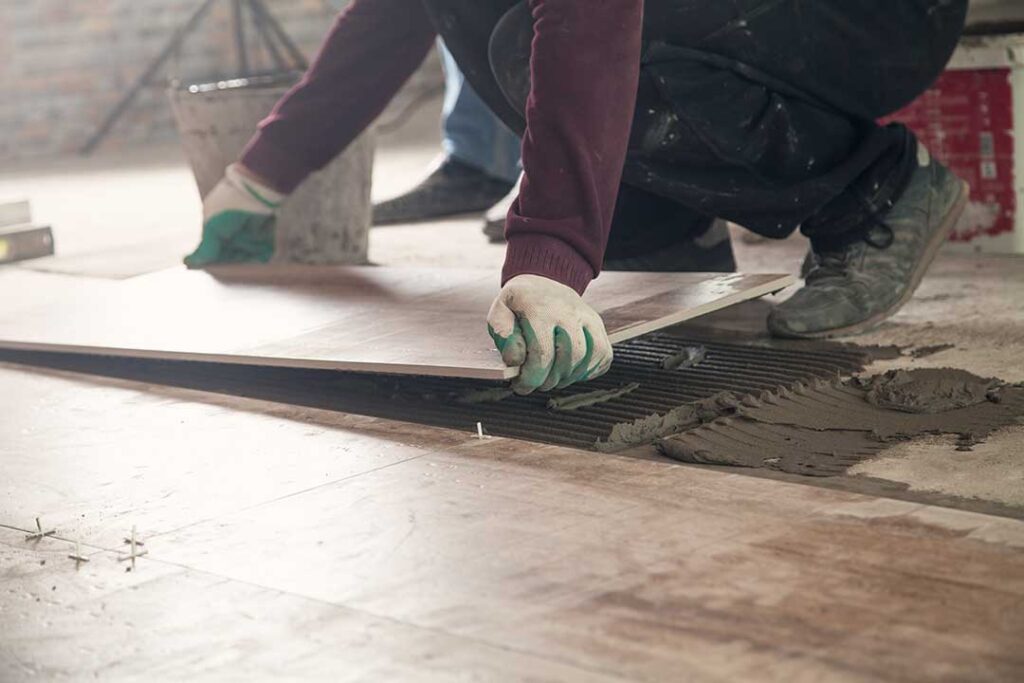
Large-format tile can reduce grout lines, which may simplify the visual design. However, larger tile generally requires careful attention to floor flatness. Uneven surfaces can create lippage, where one tile edge sits higher than another.
For older homes, the condition of the existing floor may be more significant than the size of the new material. A flooring trend cannot compensate for moisture, movement, or an unstable subfloor.
Is patterned flooring becoming popular again?
Yes. Herringbone, chevron, parquet-inspired layouts, checkerboard designs, and framed tile patterns are receiving renewed attention in 2026. Herringbone and Versailles-style arrangements are particularly visible in current design forecasts. ([marthastewart.com](https://www.marthastewart.com/flooring-trends-2026-11846567?utm_source=openai))
Patterns are often most effective when used selectively. A hallway, entry, dining area, or small bathroom may benefit from a defined layout without making the entire home feel visually complicated.
There is a difference between herringbone and chevron:
- Herringbone uses rectangular pieces placed in a staggered zigzag.
- Chevron uses angled ends that meet in a continuous point.
Both require more planning than a standard straight installation. Direction, room shape, transitions, and the position of doorways all affect the final appearance.
For a home with several adjoining rooms, a patterned floor can also help define one area without adding a wall. The surrounding rooms usually benefit from quieter flooring so the pattern remains an accent rather than competing with every other finish.
What tile styles are trending for kitchens, entries, and bathrooms?
Tile trends are moving toward texture, earthy color, handmade variation, and warmer visual character. Terracotta-inspired surfaces, softly irregular tile, antique references, and high-contrast checkerboard patterns are among the styles being reported for 2026. Houzz has also identified increased interest in terracotta flooring searches in its U.S. trend data. ([blog.houzz.com](https://blog.houzz.com/2026-u-s-houzz-emerging-summer-trends-report/?utm_source=openai))
In practical terms, this can include:
- Muted clay, sand, cream, and brown tones
- Small-format tile used in a deliberate pattern
- Stone-look porcelain with natural variation
- Matte finishes that are less reflective
- Wood-look tile in areas where actual wood may be exposed to frequent moisture
For entryways, slip resistance and cleanability matter more than a perfectly smooth surface. A heavily textured tile may hide dirt but can be harder to sweep and mop. Very light grout can also show tracked-in soil quickly during wet and snowy seasons.
Bathrooms require special attention to water management, slope, grout maintenance, and the transition between wet and dry areas. A decorative tile is still a flooring system, not just a color choice.
Is luxury vinyl still a major flooring trend?
Wood-look luxury vinyl remains widely used because it combines a familiar appearance with resistance to routine spills and relatively simple maintenance. Current flooring coverage describes resilient products as increasingly realistic, with warmer colors, more convincing texture, and broader plank formats. ([houzz.com](https://www.houzz.com/magazine/whats-new-in-flooring-for-2026-stsetivw-vs~184614910?utm_source=openai))
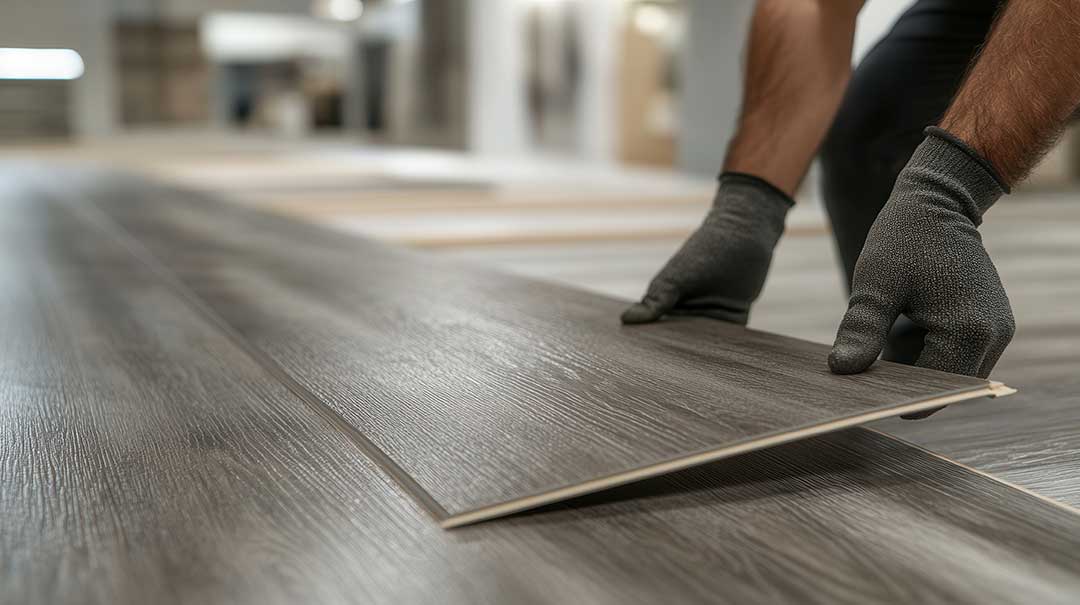
It can be practical in kitchens, laundry rooms, mudrooms, and finished lower levels, but the term “waterproof” should not be treated as a guarantee against every flooring problem. Water can still reach seams, edges, walls, or the subfloor. Plumbing leaks and prolonged moisture require prompt attention regardless of the surface material.
Other factors to review include:
- Whether the product is approved for below-grade use
- The required subfloor flatness
- The type and quality of the underlayment
- Sound transmission between floors
- Repair options if one section becomes damaged
- Indoor-air-quality certifications and odor during installation
A product that performs well in a busy household may not be the most suitable choice for a historic room where preserving original wood is the priority.
Are natural and lower-impact materials gaining attention?
Sustainability is appearing less as a single style and more as a set of practical questions. People are asking how long a floor may last, whether it can be repaired, what happens at the end of its service life, and whether the material contributes to indoor air concerns.
Wood, cork, linoleum-type materials, bamboo, reclaimed flooring, and tile may each have environmental advantages in particular situations. Those advantages depend on sourcing, manufacturing, transportation, durability, maintenance, and disposal.
The most useful approach is to compare documented product information rather than rely on broad labels such as “green” or “eco-friendly.” Look for published information about emissions, recycled content, responsible sourcing, and expected service life.
Keeping an existing floor in service can also be a sustainable decision. Refinishing sound wood, repairing a small damaged area, or replacing only a worn section may use fewer resources than removing an entire floor that remains structurally useful.
How should local households choose among the trends?
The best 2026 flooring choice is usually the one that fits the home’s moisture exposure, traffic, architecture, and maintenance habits. Style should narrow the options, not determine the decision by itself.
Before choosing, consider:
- Where snow, grit, and wet footwear enter the home
- Whether the room is above a crawl space, basement, or slab
- How much natural light the room receives
- Whether original trim or historic flooring should remain visible
- How often the floor can realistically be cleaned
- Whether a future repair can be made without replacing the entire room
Warm wood tones, matte finishes, and restrained patterns are likely to remain useful beyond a single design season. In contrast, highly specific colors or dramatic patterns may be better limited to smaller areas that are easier to update.
The most durable trend is a floor that looks appropriate to the house, feels comfortable underfoot, and continues to function through the wet, cold, and active seasons common to local households.